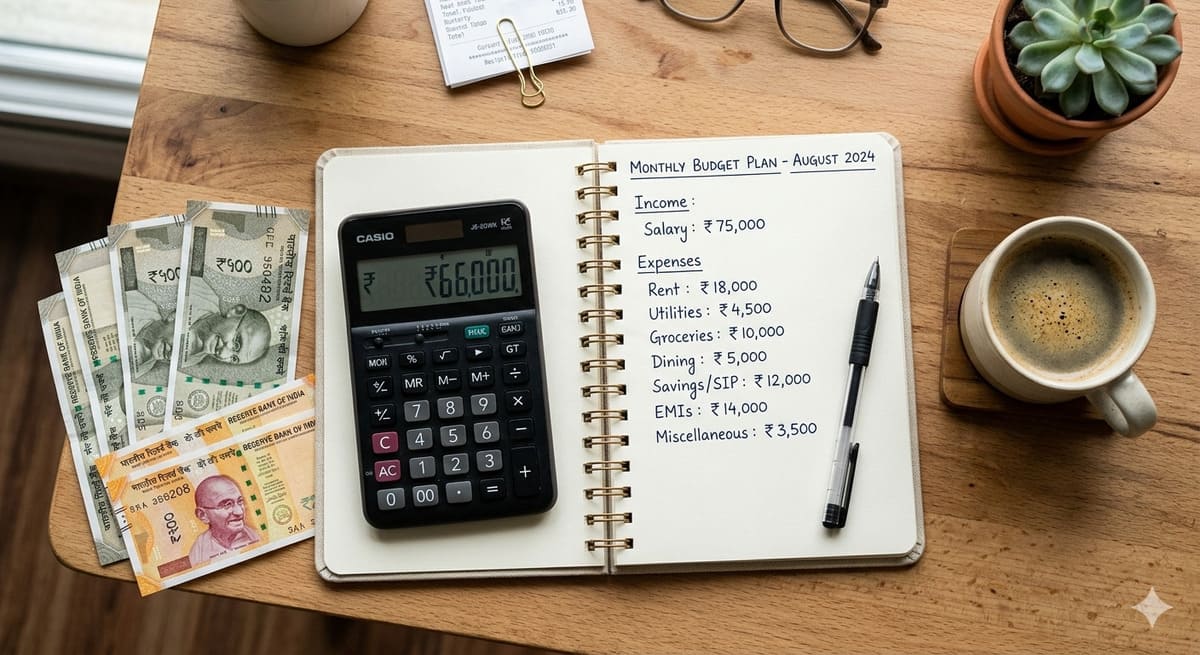
If you’re trying to figure out how to plan monthly budget on 30000 salary, you’re not alone — rent, groceries, fuel, and the occasional EMI all pulling at the same limited pool of money makes it feel like a tightrope walk. If you’ve ever reached the third week of the month wondering where your salary disappeared, you’re not alone. Millions of working professionals in India earn around this figure, and the good news is: you don’t need a bigger salary to build financial stability — you need a system.
This guide breaks that system down into clear, practical steps, with real numbers, a working example budget, and answers to the questions people actually ask when trying to plan a monthly budget on 30000 salary without feeling restricted.
Budgeting is just one piece of the bigger picture. If you’re new to managing money altogether, it’s worth starting with our guide on what personal finance actually means and how it all fits together before diving into the specifics below.
Why Budgeting Matters More at 30,000 Than at ₹1,00,000
There’s a common myth that budgeting is something you do once you’re earning “enough.” In reality, the opposite is true. The lower your income, the less room there is for waste — every ₹500 leak matters more, and every good habit compounds faster relative to your total income.
The goal of this guide isn’t to make you feel restricted. It’s to help you build a repeatable structure so that saving, spending, and enjoying life all happen intentionally instead of by accident.
Step 1: Understand Your Actual Take-Home Salary
Before you plan anything, you need to know the real number you’re working with — not your CTC (Cost to Company), but what actually lands in your bank account.This is the first real step in learning how to plan monthly budget on 30000 salary.
If your salary structure shows 30,000 as gross pay, your in-hand amount after standard deductions might look like this:
| Deduction | Approximate Amount |
|---|---|
| EPF (Employee Provident Fund) | ₹1,200–₹1,800 |
| ESI (if applicable) | ₹225 |
| Professional Tax | ₹150–₹200 |
| Approximate Take-Home | ₹27,000–₹29,000 |
For simplicity, this guide uses 30,000 as the working number, but always budget based on the exact amount that hits your account — not your offer letter figure.
💡 Tip: Check your payslip every month for the first few months of a new job. Deductions can shift slightly due to bonuses, tax regime changes, or PF contribution adjustments.
Step 2: Use the 50-30-20 Rule (Adjusted for Indian Cities)
The 50-30-20 rule is one of the most widely used budgeting frameworks globally, and for good reason — it’s simple enough to remember without a spreadsheet.This is the simplest framework for how to plan monthly budget on 30000 salary without needing a complex spreadsheet.
The classic structure:
- 50% → Needs (rent, groceries, bills, transport)
- 30% → Wants (entertainment, eating out, shopping)
- 20% → Savings (emergency fund, investments)
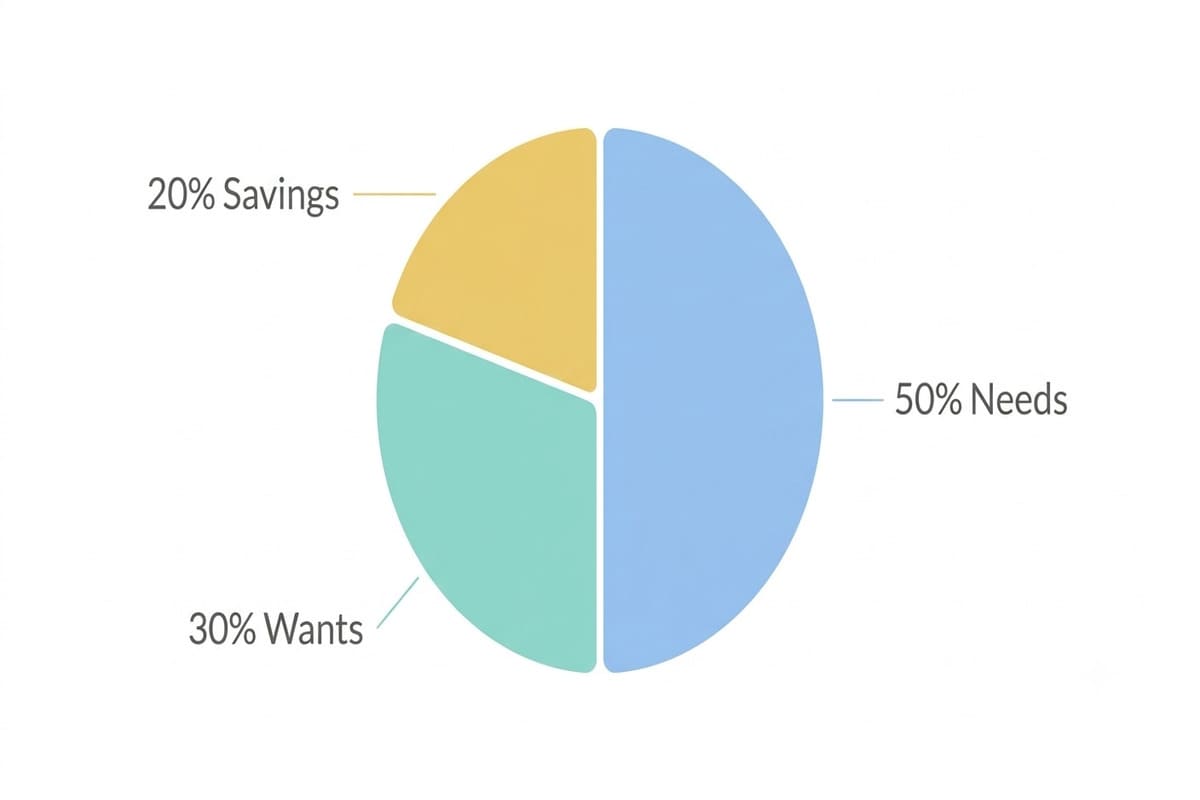
Applied to 30,000:
- Needs: ₹15,000
- Wants: ₹9,000
- Savings: ₹6,000
Why This Rule Often Needs Tweaking in India
In most Indian metros — Mumbai, Bangalore, Delhi NCR, Pune — rent alone can eat up 30–40% of a 30,000 salary. That makes the classic 50% “needs” cap unrealistic for many renters.
A more realistic Indian city version:
| Category | Metro Cities | Tier-2/Tier-3 Cities |
|---|---|---|
| Needs | 55–65% | 45–50% |
| Wants | 15–25% | 25–30% |
| Savings | 15–20% | 20–25% |
The exact split matters less than the habit of splitting — the moment you start categorizing every rupee, you gain control.
Step 3: Break Down Your Essential Expenses (Needs)
Here’s how to plan monthly budget on 30000 salary by breaking your essential expenses into clear categories. “Needs” are the non-negotiables — the things you must pay regardless of mood or motivation.
A realistic breakdown on ₹30,000:
| Item | Amount |
|---|---|
| Rent (shared/1BHK outskirts) | ₹8,000 |
| Groceries | ₹3,000 |
| Electricity & Utilities | ₹1,500 |
| Transport/Fuel | ₹1,500 |
| Mobile/Internet | ₹500 |
| Basic Medical/Insurance | ₹500 |
| Total Needs | ₹15,000 |
If Rent Is Eating Too Much of Your Salary
If your rent alone crosses 35–40% of your take-home pay, it’s worth actively addressing rather than absorbing the hit every month:
- Consider shared accommodation — splitting a 2BHK often costs less than 60% of a 1BHK alone
- Look slightly outside prime areas — a 15–20 minute commute can cut rent by 20–30%
- Negotiate at renewal time — many landlords prefer a small discount over a vacant flat
- Check if company transport or hybrid work can reduce your need to live centrally
Housing cost control is, by far, the single biggest lever in a tight budget — more impactful than cutting daily coffee or lunch expenses.
Step 4: Manage Your Lifestyle Expenses (Wants)
Budgeting that eliminates all joy rarely lasts. “Wants” — food delivery, OTT subscriptions, shopping, weekend outings — exist for a reason: they keep you motivated to stick with the plan.
Suggested cap: ₹5,000–₹9,000 depending on your city and lifestyle priorities.
Practical ways to enjoy your “wants” without overspending:
- Cap food delivery to 2–3 times a month and cook the rest — this alone can save ₹2,000–₹3,000
- Share OTT subscriptions with family or friends (most platforms allow multiple profiles)
- Set a fixed “fun money” amount at the start of the month and stop spending once it’s used
- Use the 24-hour rule for non-essential purchases above ₹1,000 — wait a day before buying; impulse decisions rarely survive it
Budgeting isn’t about removing happiness — it’s about making sure your spending reflects what you actually value, not what you clicked on at 11 PM.
Step 5: Save Before You Spend — Not After
This single habit shift changes everything.
Most people do this:
Income → Spend → Save whatever’s left (usually nothing)
Instead, do this:
Income → Save first → Spend the rest
From a 30,000 salary, aim to save at least ₹5,000–₹6,000 every month, right when your salary lands — ideally through an automatic transfer or standing instruction, so it happens before you have a chance to spend it.
Split your savings into two buckets:
1. Emergency Fund (Build This First)
Your emergency fund should cover 3–6 months of essential expenses. If your monthly needs are ₹20,000, your target should be ₹60,000–₹1,20,000.
Start small — even ₹3,000 a month builds a meaningful cushion within two years.
Keep emergency funds liquid and safe, not locked away in long-term investments:
- High-interest savings account
- Liquid mutual funds
- Short-term fixed deposits (FDs)
For a clear, jargon-free explanation of savings instruments and financial safety, the RBI’s official financial literacy portal is a reliable government resource.
2. Long-Term Investments (After the Emergency Fund Is in Place)
Once your emergency cushion is ready, redirect savings toward wealth-building:
- SIP in mutual funds — even ₹2,000/month can grow significantly over 10+ years due to compounding
- Public Provident Fund (PPF) — government-backed, tax-free returns, 15-year lock-in
- Recurring Deposits (RDs) — good for short-to-medium-term goals
- National Pension System (NPS) — for long-term retirement planning with additional tax benefits
For authoritative details on NPS, refer to the Pension Fund Regulatory and Development Authority (PFRDA). For mutual fund basics and investor protection guidelines, SEBI’s investor education portal is a solid starting point: SEBI Investor Education.
Step 6: Track Every Rupee (This Is Where Most Budgets Fail)
Tracking every rupee is one of the most overlooked parts of how to plan monthly budget on 30000 salary. A budget without tracking is just a wish list. You don’t need anything fancy — a simple Excel sheet, Google Sheets, or a budgeting app works fine.
How to start:
- For the first 2 months, record every expense — no matter how small
- Categorize each expense (Needs / Wants / Savings)
- At month-end, compare actual spending to your planned amounts
- Adjust categories that consistently overshoot
Most people are genuinely surprised by how much disappears into small, forgettable purchases — a ₹40 tea here, a ₹150 auto ride there. Tracking makes the invisible visible.
Popular free tools for this: Google Sheets templates, or budgeting apps that link to your bank/UPI transactions for automatic categorization.
Step 7: Find and Fix Hidden Money Leaks
Fixing these leaks is a key part of how to plan monthly budget on 30000 salary without constant frustration.
Small, repeated expenses quietly do more damage than one big splurge. Common leaks include:
- Daily small snacks/tea — ₹100/day adds up to ₹3,000/month
- Unused subscriptions — gym memberships, apps, or OTT platforms you forgot to cancel
- Frequent app-based cab rides instead of bus/metro for short distances
- Impulse online shopping — flash sales and “limited time” offers designed to bypass rational thinking
- Late payment fees on credit cards or bills due to missed due dates
Go through your last two bank statements and highlight anything recurring that you don’t actively value. This 20-minute exercise often uncovers ₹1,000–₹2,000 in monthly savings hiding in plain sight.
Step 8: If 30,000 Still Feels Too Tight, Focus on Income Too
Budgeting has limits — if your expenses consistently exceed your income even after trimming every leak, the missing piece may not be discipline, it’s income. There’s no shame in that; it’s simply the next lever to pull.
Ways to build additional income without quitting your main job:
- Freelancing in your existing skill area (writing, design, data entry, tutoring)
- Upskilling through free or low-cost online courses to qualify for better-paying roles
- Part-time tutoring for school/college subjects or languages
- Selling digital services (templates, social media management, basic video editing)
- Weekend gig work in fields with flexible hours
Even an extra ₹5,000/month can meaningfully change your financial comfort — often more than another round of expense-cutting can.
Real Example: how to plan Monthly Budget on 30000 salary
Here’s a working template that balances stability, lifestyle, and savings:
| Category | Amount | % of Salary |
|---|---|---|
| Rent | ₹8,000 | 27% |
| Groceries | ₹3,000 | 10% |
| Utilities | ₹1,500 | 5% |
| Transport | ₹1,500 | 5% |
| Insurance/Medical | ₹500 | 2% |
| Wants (lifestyle) | ₹6,000 | 20% |
| Savings | ₹6,000 | 20% |
| Buffer/Miscellaneous | ₹3,500 | 11% |
| Total | ₹30,000 | 100% |
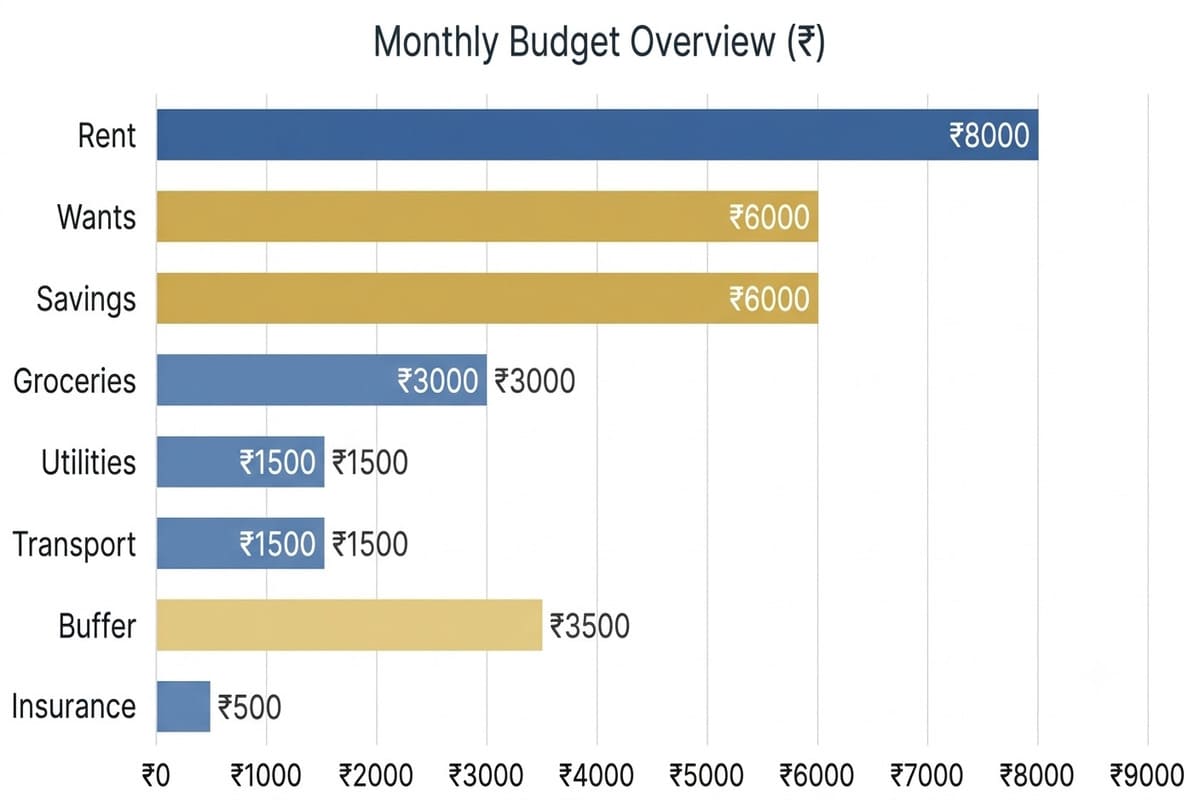
This structure builds in a small buffer (₹3,500) for irregular months — festivals, gifts, minor repairs — so your budget doesn’t collapse the moment something unexpected comes up.
Common Budgeting Mistakes to Avoid
Avoiding these mistakes matters just as much as any step above when you’re learning how to plan monthly budget on 30000 salary.
- ❌ Not tracking expenses — you can’t fix what you don’t measure
- ❌ Saving only what’s left over — flip the order; save first
- ❌ Skipping the emergency fund — without it, one bad month pushes you into debt
- ❌ Relying on credit cards to bridge shortfalls — this often masks a budgeting problem rather than solving it
- ❌ Taking personal loans for lifestyle spending — vacations, gadgets, or weddings funded by high-interest debt can take years to recover from
A Quick Note on Tax Savings
Smart tax planning is also part of how to plan monthly budget on 30000 salary effectively. Even at ₹30,000/month, tax-saving investments under Section 80C (like PPF, ELSS mutual funds, or life insurance premiums) can reduce your taxable income depending on which tax regime you’re under. For accurate, up-to-date details on deductions and regime comparisons, always refer to the Income Tax Department’s official website rather than third-party estimates, since tax rules are revised periodically.
Final Thoughts
Once you understand how to plan monthly budget on 30000 salary, the process stops feeling like restriction and starts feeling like clarity and control. With a clear structure, even a modest income can support:
- A functioning emergency fund
- Consistent, if small, investments
- Freedom from high-interest debt
- A genuine sense of financial stability
The framework matters more than perfection. Start with rough numbers, track for two months, and adjust as you learn your own patterns. Financial success isn’t determined by how much you earn — it’s determined by how deliberately you manage what you earn.
Frequently Asked Questions – FAQ
1. Is a 30000 salary enough to save money, and how do I plan a monthly budget on 30000 salary properly?
Ans – Yes. With disciplined control over rent and lifestyle spending, saving ₹4,000–₹6,000 monthly is realistic for most people, even in moderately expensive cities.
2. How much should I save from ₹30,000 salary?
Ans – Aim for 20% (₹6,000). If that feels difficult initially, start at 10–15% and increase gradually as expenses stabilize.
3. Should I build an emergency fund or start investing first?
Ans – Always prioritize the emergency fund first. Investments can lose short-term value or take time to liquidate, while an emergency fund needs to be instantly accessible.
4. Can the 50-30-20 rule actually work in Indian cities?
Ans – Yes, but it often needs adjustment — particularly in metros where rent consumes a larger share of income. A 60-20-20 or 65-15-20 split is often more realistic.
5. What is the best budgeting method for beginners?
Ans – The 50-30-20 rule (or its adjusted Indian version) is the simplest starting point because it requires no complex tracking — just three categories.
6. How long does it take to build a full emergency fund?
Ans – On ₹30,000 salary saving ₹3,000/month toward an emergency fund, a 3-month cushion (~₹60,000) typically takes about 18–20 months, faster if you reduce discretionary spending temporarily.
7. Is it okay to have zero savings in the first month of budgeting?
Ans – Yes — the first month is mainly for tracking and understanding your actual spending pattern. Aggressive saving targets work better once you know where your money really goes.
8. Should I use a credit card while on a tight budget?
Ans – Only if you can pay the full bill every month without exception. Credit cards used for lifestyle spending on a tight budget often lead to a debt cycle that’s hard to break.
Disclaimer: This article is for educational and informational purposes only. Please consult a certified financial advisor before making investment decisions.

Shilpesh Rathod is the founder of All Finance Knowledge. He holds a B.Com degree along with JAIIB and CAIIB banking certifications, and brings 19+ years of experience in the banking sector across savings, investments, and financial planning. Read more: https://allfinanceknowledge.com/about-us/
9 thoughts on “How to Plan a Monthly Budget on 30,000 Salary”