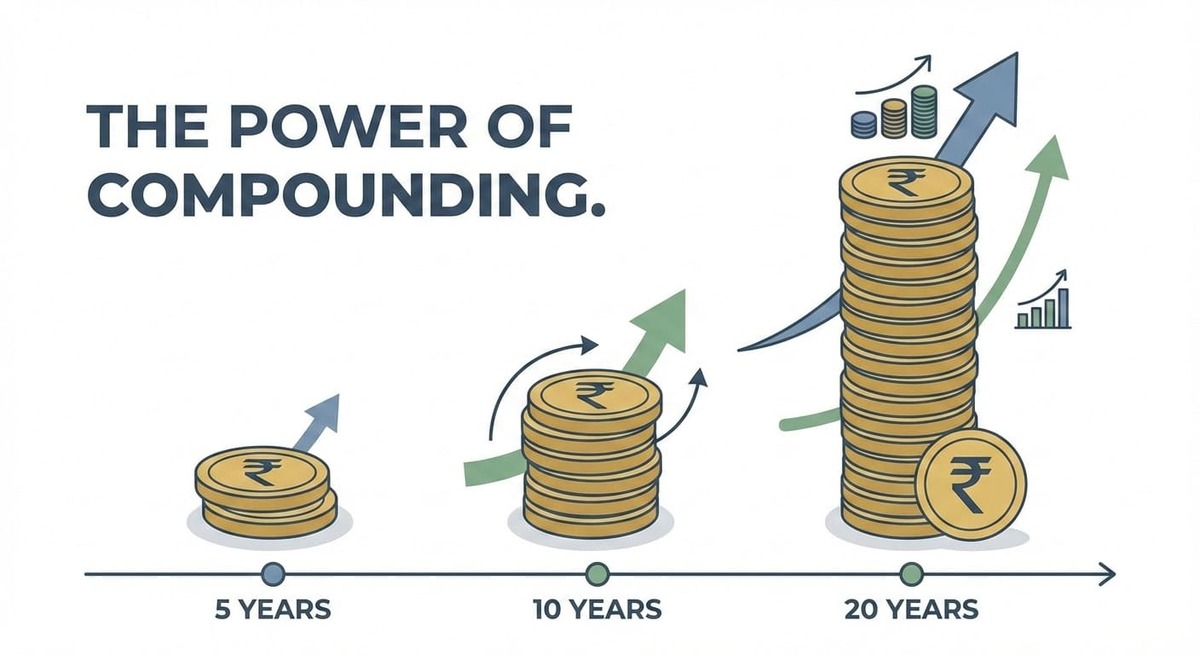
How compounding works is one of the most powerful concepts in investing and long-term wealth creation. Many beginners save money regularly but do not realize how compounding can significantly grow their wealth over time.
In this article, you will learn how compounding works, why time matters more than money, and how even small investments can grow into large wealth with real-life examples. This guide is written for beginners, using simple language and practical illustrations.
“If you delay investing by even 5 years, you may lose lakhs or even crores in future wealth.”
What Is Compounding?
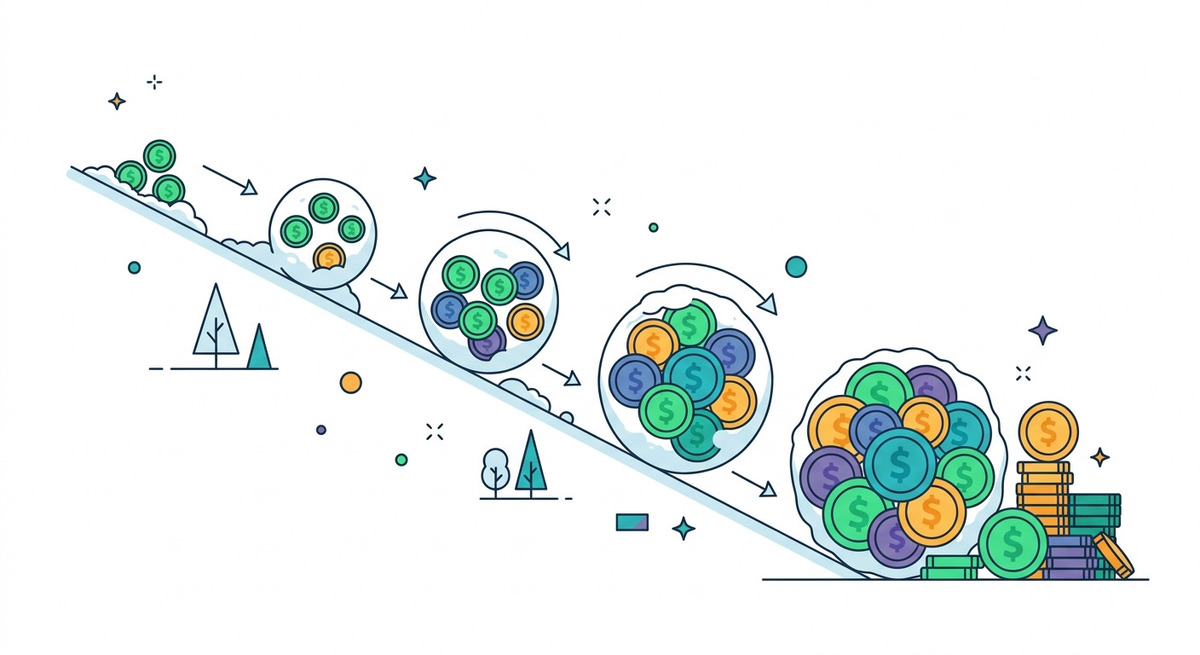
Compounding means earning returns not only on your original money but also on the returns you have already earned.
In simple words:
👉 Money earns money, and then that money also earns money.
This creates a snowball effect over time.
Simple Formula of Compounding
Although you don’t need to remember formulas, the idea is:
Wealth = Principal + Interest + Interest on Interest
The longer your money stays invested, the stronger this effect becomes.
“Compounding works like a snowball—growth becomes faster over time.”
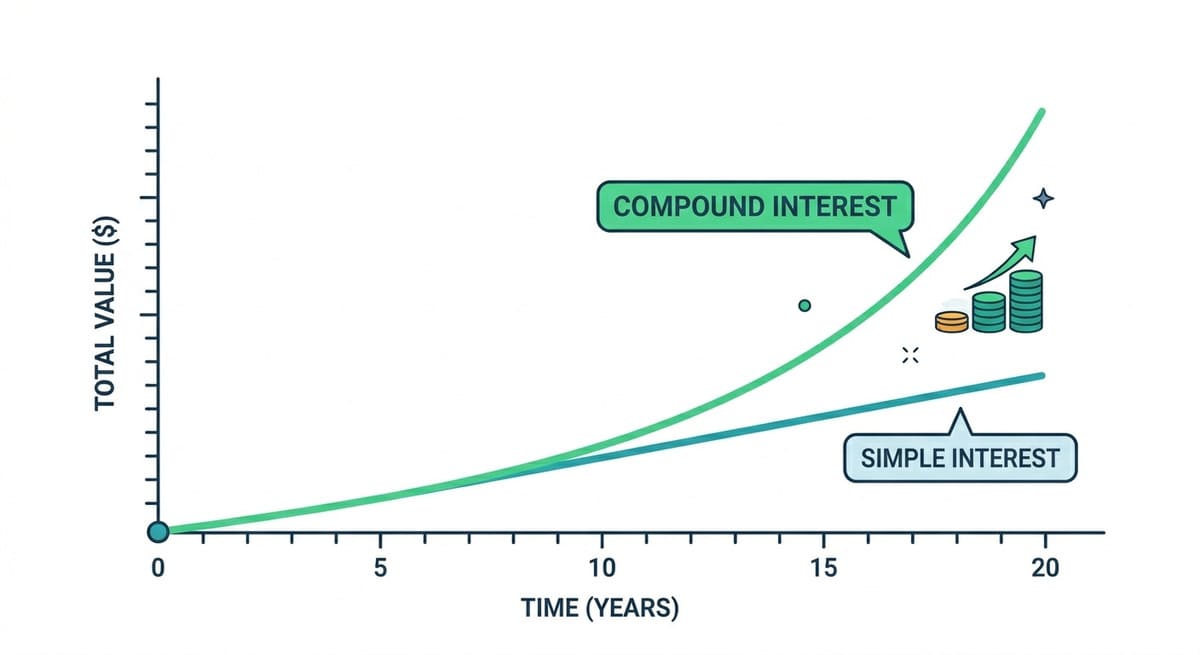
Simple Interest vs Compounding (Quick Comparison)
Let’s understand this with a basic example.
Simple Interest
- You invest ₹10,000 at 10% interest
- Every year, you earn ₹1,000
- After 10 years → Total = ₹20,000
Compounding Interest
- You invest ₹10,000 at 10% compounded annually
- Interest is added to the principal every year
- After 10 years → Total ≈ ₹25,937
📌 Same money, same rate, different result
That shows how compounding works. Extra growth comes purely from compounding.
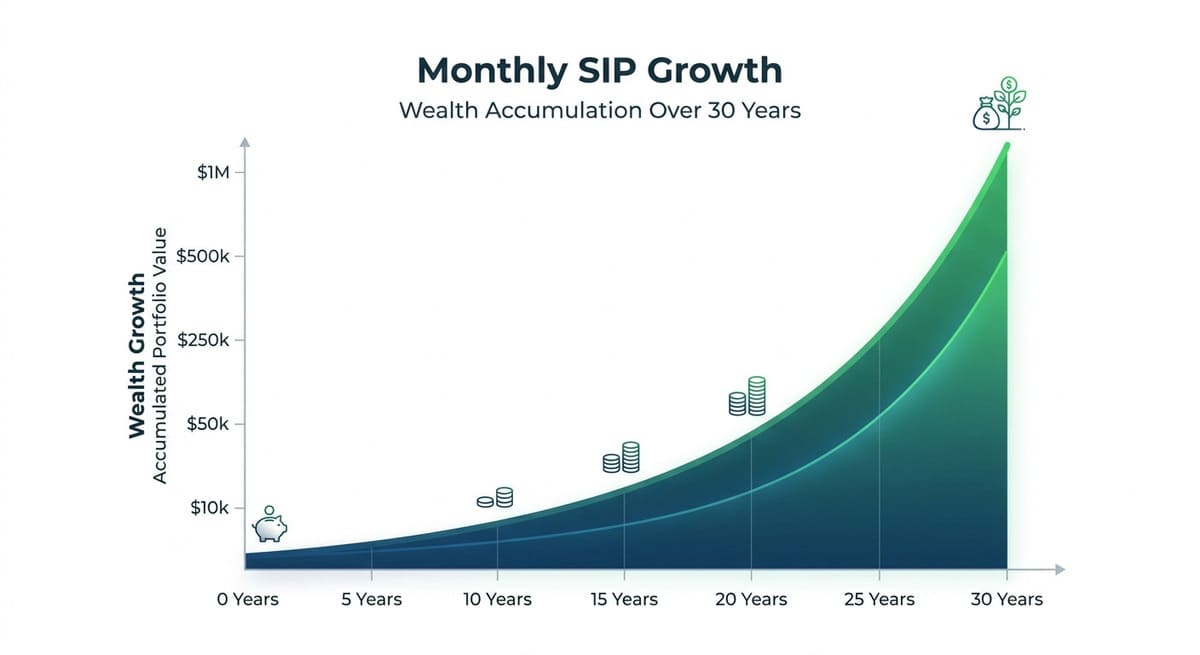
How Compounding Works: Real Examples
Example 1: Small Monthly Investment (SIP Example)
Let’s say you invest ₹5,000 per month in a mutual fund SIP with an average return of 12% per year.
| Investment Period | Total Invested | Value After Compounding |
| 10 years | ₹6 lakh | ~₹11.6 lakh |
| 20 years | ₹12 lakh | ~₹49.9 lakh |
| 30 years | ₹18 lakh | ~₹1.76 crore |
👉 Notice how the growth accelerates in later years.
This is how compounding works.
“Long-term SIP investments benefit the most from compounding.”
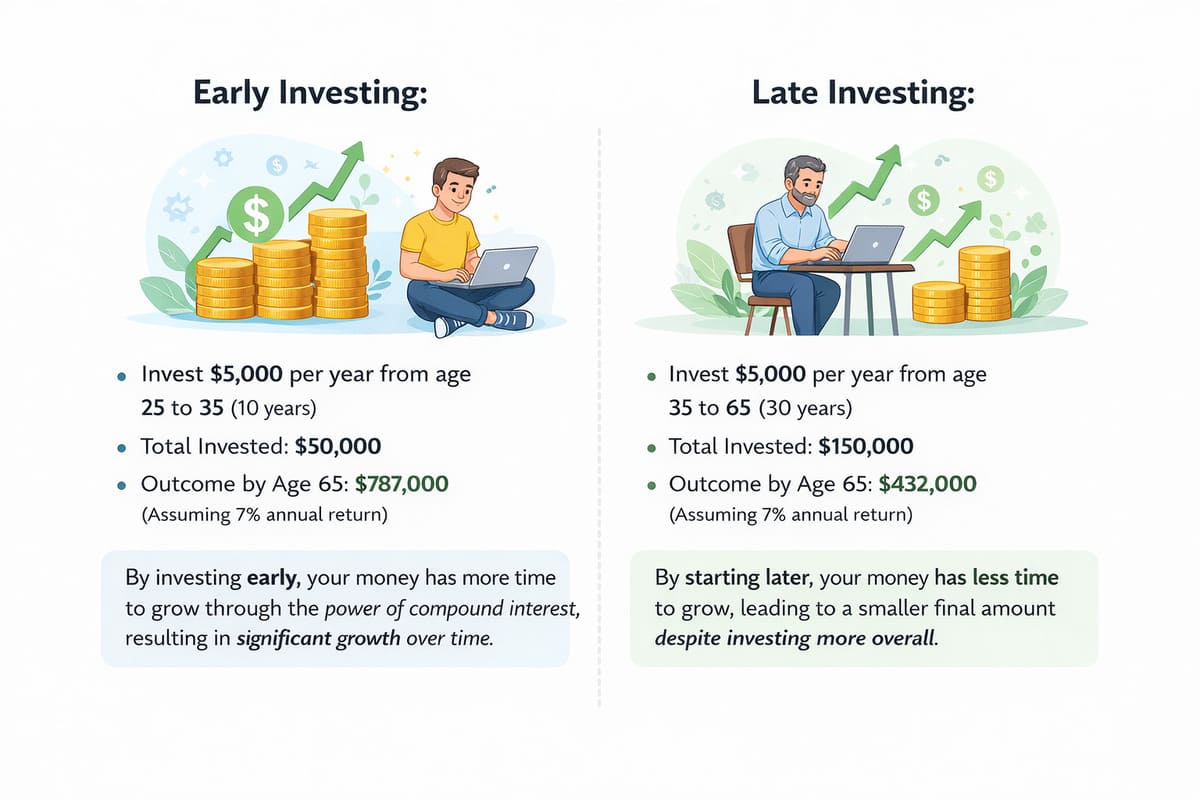
Example 2: Starting Early vs Starting Late
Person A (Starts at 25)
- Invests ₹5,000/month
- Stops at age 35 (10 years)
- Total invested: ₹6 lakh
Person B (Starts at 35)
- Invests ₹5,000/month
- Continues till age 60 (25 years)
- Total invested: ₹15 lakh
Assuming 12% annual return:
- Person A’s final value at 60 ≈ ₹1.1 crore
- Person B’s final value at 60 ≈ ₹95 lakh
📌 Even though Person A invested less money, starting early made all the difference. This is perfect example of how compounding works.
“Starting early can create more wealth even with smaller investments.”
Why Time Is the Most Important Factor?
Many beginners focus on:
❌ Finding the best stock
❌ Timing the market
❌ High returns
But the real secret is time.
The Power of Long-Term Compounding
- First 10 years: growth feels slow
- Next 10 years: money starts accelerating
- Final 10 years: wealth explodes
This is why long-term investors benefit the most. If one needs to experience how compounding works, time is the most important factor
How Often Compounding Happens (Why Frequency Matters)
Many beginners understand the basic idea of compounding, but one important factor they often miss is compounding frequency.
Compounding does not always happen once a year. Depending on the investment, it can happen:
- Annually (once a year)
- Semi-annually (twice a year)
- Quarterly (four times a year)
- Monthly
- Daily
👉 The more frequently compounding happens, the faster your money grows.
Simple Example
Let’s compare two investments:
- Investment: ₹1,00,000
- Interest Rate: 10%
Case 1: Compounded Annually
After 1 year → ₹1,10,000
Case 2: Compounded Quarterly
Interest is added 4 times a year → Final amount slightly higher than ₹1,10,000
📌 Even though the difference looks small in one year, over 10–20 years it becomes significant.
This shows clearly how compounding works more effectively when applied frequently.
Rule of 72: Quick Way to Understand Compounding
The Rule of 72 is a simple shortcut to estimate how long it takes for your money to double.
Formula:
👉 Years to double = 72 ÷ Interest Rate
Example:
- If return = 12%
- 72 ÷ 12 = 6 years
👉 Your money will double in approximately 6 years
This rule helps beginners quickly understand the power of compounding without doing complex calculations.
Real-Life Example: Compounding in Daily Life
Compounding is not just limited to investments. It also applies in real life situations.
Positive Compounding
- Learning new skills daily
- Saving money regularly
- Building healthy habits
👉 Small actions repeated daily create big results over time.
Negative Compounding
- Credit card debt
- Loans with high interest
- Bad financial habits
📌 Just like money grows with compounding, debt also grows the same way.
That’s why it is important to avoid high-interest debt while investing for the future.
How Much Should You Invest to See Real Results?
Many beginners think they need a large amount to benefit from compounding. That’s not true.
Even small amounts can grow significantly over time.
Example:
- ₹2,000 per month
- 12% annual return
- 25 years
👉 Total invested: ₹6 lakh
👉 Final value: ~₹38 lakh
📌 The key is not the amount, but consistency + time.
Where Can You Benefit From Compounding?
Compounding works best in investments where returns are reinvested automatically.
Best Options for Compounding
- Mutual funds (especially through SIP)
- Index funds
- Stocks (long-term holding)
- PPF (Public Provident Fund)
- EPF
- Dividend reinvestment plans
📌 Savings accounts and fixed deposits offer limited compounding due to low returns. in above mention options, you can experience that how compounding works.
Common Mistakes That Kill Compounding
Many people unknowingly stop compounding from working.
1️⃣ Frequent Withdrawals
Taking money out breaks the compounding cycle.
2️⃣ Starting Late
Delaying investment costs you years of growth.
3️⃣ Chasing Short-Term Profits
Switching investments too often reduces long-term gains.
4️⃣ Panic During Market Falls
Selling during corrections stops compounding permanently.
How Beginners Can Use Compounding Safely
You don’t need expert knowledge to benefit from compounding.
Simple Beginner Strategy
- Start SIP in index or large-cap mutual funds
- Invest regularly (monthly)
- Increase SIP when income increases
- Stay invested for long term (15–20+ years)
Consistency matters more than amount.
Compounding and Inflation: The Real Battle
Inflation reduces purchasing power over time.
Saving alone cannot beat inflation.
👉 Compounding + Inflation-beating returns = Wealth creation
That’s why investing is necessary.
To understand how to manage your income effectively before investing, read our guide on the 50-30-20 budgeting rule.
Final Thoughts: Why Compounding Is Life-Changing
Compounding rewards:
✔ Patience
✔ Discipline
✔ Consistency
You don’t need a high salary or big capital. You just need to start early and stay invested.
The best time to start compounding was yesterday.
The second-best time is today.
Frequently Asked Question
Q-1 What is compounding in simple words?
Compounding means earning returns on both your original money and the returns generated earlier.
Q2. Why is compounding important in investing?
Compounding helps your money grow faster over time and is key to long-term wealth creation.
Q3. Is compounding useful for beginners?
Yes, beginners benefit the most by starting early and investing consistently.
Q4. Which investment is best for compounding?
Mutual funds, SIPs, index funds, and long-term stock investments work best.
Q5. Can compounding beat inflation?
Yes, long-term compounding with inflation-beating returns helps preserve and grow purchasing power.
Q6. How long should I stay invested for compounding?
At least 10–15 years to see meaningful results.
Q7. Does compounding work in fixed deposits?
Yes, but returns are lower compared to mutual funds and stocks.
Disclaimer- This article is for educational purposes only and does not constitute financial advice. Please consult a certified financial advisor before making any investment decisions.
5 thoughts on “How Compounding Works (With Real Examples)”