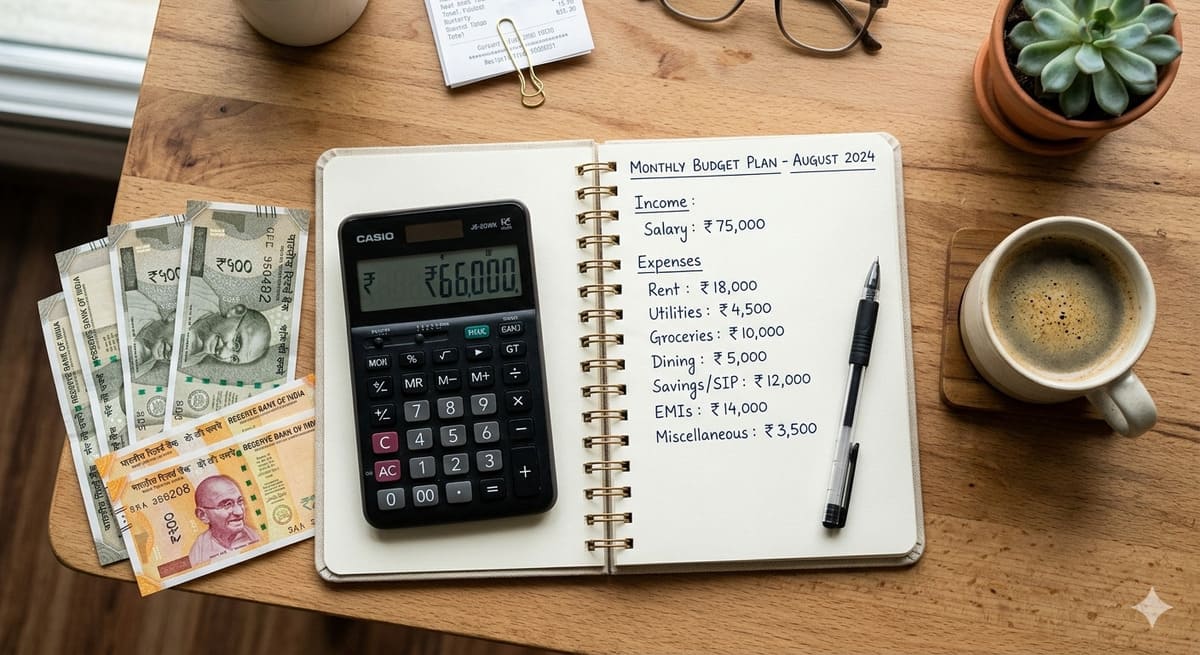
How to Plan Monthly Budget on ₹30000 Salary can feel challenging — especially with rising rent, groceries, fuel prices, and EMIs. But the truth is, you don’t need a high income to build financial stability. What you need is a clear budget plan and discipline.
If you’re wondering how to plan a monthly budget on ₹30000 salary without feeling restricted, this guide will walk you through practical steps, real examples, and a simple structure that actually works.
Let’s understand how to plan monthly budget on ₹30000 salary
Step 1: Understand Your Net Income
Before planning anything, confirm your take-home salary.
If your salary is ₹30,000:
- After PF/ESI deductions, you might receive ₹27,000–₹29,000 in hand.
- For budgeting purposes, use the exact amount credited to your bank account.
For this example, let’s assume your take-home salary is ₹30,000.
Step 2: Use the 50-30-20 Rule (Modified for India)
The 50-30-20 rule is one of the simplest budgeting methods:
- 50% → Needs
- 30% → Wants
- 20% → Savings
For ₹30,000 salary, that means:
- Needs: ₹15,000
- Wants: ₹9,000
- Savings: ₹6,000
However, in Indian cities where rent is high, you may need to slightly adjust it to:
- 60% Needs
- 20% Wants
- 20% Savings
The key is balance — not perfection.
Step 3: Break Down Essential Expenses (Needs)
Needs include necessary expenses that you cannot avoid.
Example breakdown:
- Rent: ₹8,000
- Groceries: ₹3,000
- Electricity & Utilities: ₹1,500
- Transport/Fuel: ₹1,500
- Mobile/Internet: ₹500
- Basic Medical/Insurance: ₹500
Total = ₹15,000
If your rent alone is consuming more than 40% of salary, consider:
- Shared accommodation
- Living slightly outside city center
- Negotiating rent
Controlling housing cost is the biggest budget game-changer.
Step 4: Manage Lifestyle Expenses (Wants)
Wants are optional but important for mental balance.
Examples:
- Eating out
- OTT subscriptions
- Shopping
- Weekend trips
- Entertainment
Suggested cap: ₹5,000–₹9,000
Tips to reduce overspending:
- Limit food delivery to 2–3 times per month
- Share OTT accounts with family
- Set a fixed monthly “fun money” amount
Budgeting does not mean removing happiness. It means controlling impulse spending.
Step 5: Save Before You Spend
This is the most powerful rule.
Instead of:
Spend first, save what’s left
Do this:
Save first, spend the rest
From ₹30,000 salary, try to save at least ₹5,000–₹6,000 monthly.
Divide savings into:
1️⃣ Emergency Fund
Target: 3–6 months of expenses
If monthly expenses are ₹20,000 → Emergency fund target = ₹60,000–₹1,20,000
Start small: Save ₹3,000 monthly until you build it.
You can park emergency money in:
- High-interest savings account
- Liquid mutual fund
- Short-term FD
For understanding safe savings options, you can refer to RBI’s official financial awareness resources:
Reserve Bank of India financial literacy page: https://www.rbi.org.in
2️⃣ Long-Term Investments
After emergency fund:
- SIP in mutual funds
- PPF account
- Recurring deposit
- NPS
Even ₹2,000 monthly SIP for 10 years can create significant wealth.
Internal Link Placement Suggestion:
Link this text to your article:
“Learn how SIP works for beginners”
(Place after investment paragraph)
Step 6: Track Every Rupee
Budgeting fails when you don’t track expenses.
Use:
- Excel sheet
- Google Sheets
- Budgeting apps
- Notes app
Track for at least 2 months to understand:
- Where you overspend
- Which category needs adjustment
Most people are shocked to discover how much they spend on small daily purchases.
Step 7: Cut Hidden Money Leaks
Common money leaks:
- Daily ₹100 snacks → ₹3,000/month
- Unused subscriptions
- Frequent auto rides instead of bus/metro
- Impulse online shopping
Small leaks destroy tight budgets.
Step 8: Increase Income Slowly
If ₹30,000 feels too tight, budgeting alone is not enough.
Consider:
- Freelancing
- Skill upgrade
- Online side income
- Part-time tutoring
- Selling digital services
Even extra ₹5,000 monthly changes your financial comfort level dramatically.
Real Example Budget Plan (₹30,000 Salary)
Here is a practical working example:
| Category | Amount |
| Rent | ₹8,000 |
| Groceries | ₹3,000 |
| Utilities | ₹1,500 |
| Transport | ₹1,500 |
| Insurance | ₹500 |
| Wants | ₹6,000 |
| Savings | ₹6,000 |
| Total | ₹30,000 |
This structure allows:
- Controlled lifestyle
- Consistent savings
- Financial stability
Common Budgeting Mistakes to Avoid
❌ Not tracking expenses
❌ Saving only leftover money
❌ Ignoring emergency fund
❌ Depending on credit cards
❌ Taking personal loans for lifestyle
If you already use loans, read:
“Personal Loan vs Credit Card Loan: Which Is Cheaper?”
Final Thoughts
Planning a monthly budget on ₹30,000 salary is not about restriction — it’s about clarity and control.
Even with limited income, you can:
- Build emergency savings
- Invest consistently
- Avoid debt traps
- Achieve financial stability
The earlier you start, the easier your future becomes.
Financial success is not about how much you earn — it’s about how well you manage what you earn.
Frequently Asked Questions – FAQ
1. Is ₹30,000 salary enough to save money?
Yes, if you control rent and lifestyle expenses, saving ₹4,000–₹6,000 monthly is possible.
2. How much should I save from ₹30,000 salary?
Ideally 20% (₹6,000). Minimum try 15%.
3. Should I invest or build emergency fund first?
Always build emergency fund first.
4. Can I follow 50-30-20 rule in India?
Yes, but modify based on rent and city expenses.
5. What is the best budgeting method for beginners?
50-30-20 rule is the simplest and most practical method.
Disclaimer– This article is for educational and informational purposes only.
Please consult a certified financial advisor before making investment decisions.
2 thoughts on “How to Plan Monthly Budget on ₹30000 Salary”